
Alright, let’s cut to the chase. Investing can feel like one of those intimidating adulting milestones—like filing taxes or trying to decipher what a 401(k) even is. But here’s the tea: you don’t need a finance degree or piles of cash to start building wealth. If you’re in your 20s or 30s, this is your golden hour to dive in and let time do its magic. So grab your iced coffee, and let’s get into it.

Why Should You Start Investing NOW?
Think of investing as planting a tree. The sooner you plant it, the more time it has to grow into a lush money tree. Thanks to the magic of compound interest, even small investments can snowball into big bucks over time. For example, if you invest $100 a month starting at age 25, you could have around $300,000 by age 65 (assuming a 7% annual return). Start at 35? That number drops to about $150,000. Time is your bestie here.
But it’s not just about retirement (although, hi, future-you will thank you). Investing can help you save for travel, buying a house, starting a business, or just living that financially independent life. The earlier you start, the less you’ll need to save later.
The Basics: What Even Is Investing?
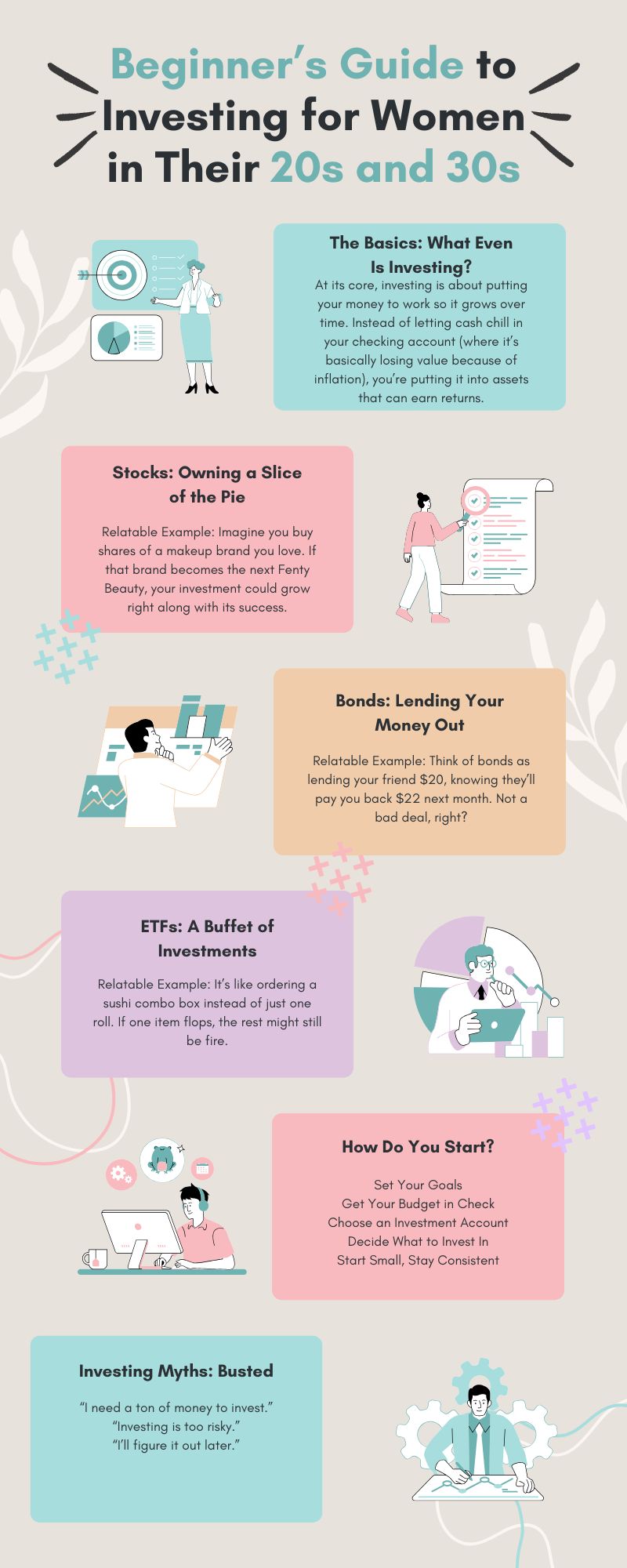
At its core, investing is about putting your money to work so it grows over time. Instead of letting cash chill in your checking account (where it’s basically losing value because of inflation), you’re putting it into assets that can earn returns. Here’s a breakdown of three common investment options:
1. Stocks: Owning a Slice of the Pie
When you buy a stock, you’re basically buying a tiny piece of a company. If that company does well (hello, profits!), the value of your stock goes up, and you can make money by selling it for more than you paid. Some companies also pay dividends, which are like bonus cash payments for being a shareholder.
- Relatable Example: Imagine you buy shares of a makeup brand you love. If that brand becomes the next Fenty Beauty, your investment could grow right along with its success.
2. Bonds: Lending Your Money Out
Bonds are like IOUs. When you buy a bond, you’re lending money to a company or government, and they promise to pay you back with interest. Bonds are generally less risky than stocks, but they also offer lower returns.
- Relatable Example: Think of bonds as lending your friend $20, knowing they’ll pay you back $22 next month. Not a bad deal, right?
3. ETFs: A Buffet of Investments
ETFs (Exchange-Traded Funds) are like a sampler platter of investments. Instead of buying one stock or bond, you’re buying a little bit of everything in a package. This spreads out your risk because your money isn’t tied to just one company or sector.
- Relatable Example: It’s like ordering a sushi combo box instead of just one roll. If one item flops, the rest might still be fire.
How Do You Start?
Starting might seem like the hardest part, but trust—it’s not as complicated as it sounds. Here’s your step-by-step:
1. Set Your Goals
What are you investing for? A dreamy European vacation? A down payment on your first home? Retirement at 45? Knowing your goals will help you decide how much risk you can take and what kinds of investments to choose.
2. Get Your Budget in Check
Before you start throwing money into the stock market, make sure your financial house is in order. This means:
- Paying off high-interest debt (like credit cards).
- Building an emergency fund (aim for 3–6 months of expenses).
3. Choose an Investment Account
You’ll need a brokerage account to buy stocks, bonds, or ETFs. Some popular platforms for beginners include:
- Robinhood: Super user-friendly with no commission fees.
- Fidelity or Charles Schwab: Great for long-term investors with solid customer support.
- Acorns: Automatically rounds up your purchases and invests the spare change. Easy-peasy.
4. Decide What to Invest In
If the idea of picking individual stocks makes you break out in hives, don’t worry. Many beginners start with ETFs or index funds, which track the performance of a whole market (like the S&P 500). They’re low-cost and less risky than betting on one company.
5. Start Small, Stay Consistent
You don’t need to drop a fortune to get started. Even $10 a week can add up over time. The key is consistency. Set up automatic transfers to your investment account so you’re not tempted to spend that money elsewhere.
Investing Myths: Busted
“I need a ton of money to invest.”
False. Many platforms let you start with as little as $1. Fractional shares mean you can own a piece of Amazon or Tesla without buying a full share.
“Investing is too risky.”
It’s true that all investments carry some risk, but not investing is risky too. Keeping all your money in cash means you’re losing purchasing power over time thanks to inflation. The key is to diversify and not put all your eggs in one basket.
“I’ll figure it out later.”
Later often turns into never. The earlier you start, the more time your money has to grow. Don’t wait for the perfect moment—just start.
Pro Tips for Investing Like a Boss
- Educate Yourself: Follow financial blogs, listen to podcasts (HerMoney by Jean Chatzky is a fave), or watch YouTube channels that break down investing in simple terms.
- Ignore the Noise: The market will go up and down. Don’t panic-sell when things dip—stay focused on your long-term goals.
- Celebrate Small Wins: Investing isn’t just for billionaires. Celebrate the fact that you’re building a secure future, even if you’re starting with $5.
Real Talk: What’s the Downside?
Every investment has risks. Stocks can lose value, bonds might not keep up with inflation, and there’s always a chance you’ll make mistakes. But the biggest risk? Not starting at all. By taking small steps and staying informed, you’ll be miles ahead of where you were yesterday.
Final Thoughts
Investing is about taking control of your financial future. It’s not about getting rich overnight; it’s about building steady, long-term wealth. So whether you’re saving for a dream vacay, building an emergency fund, or prepping for retirement, know that you’ve got this. Starting today is a win for future-you. Now go out there and make that money work for you!

 Midtown and Company